Alvar Aalto’s Oulu River Estuary Vision: Koskikeskus
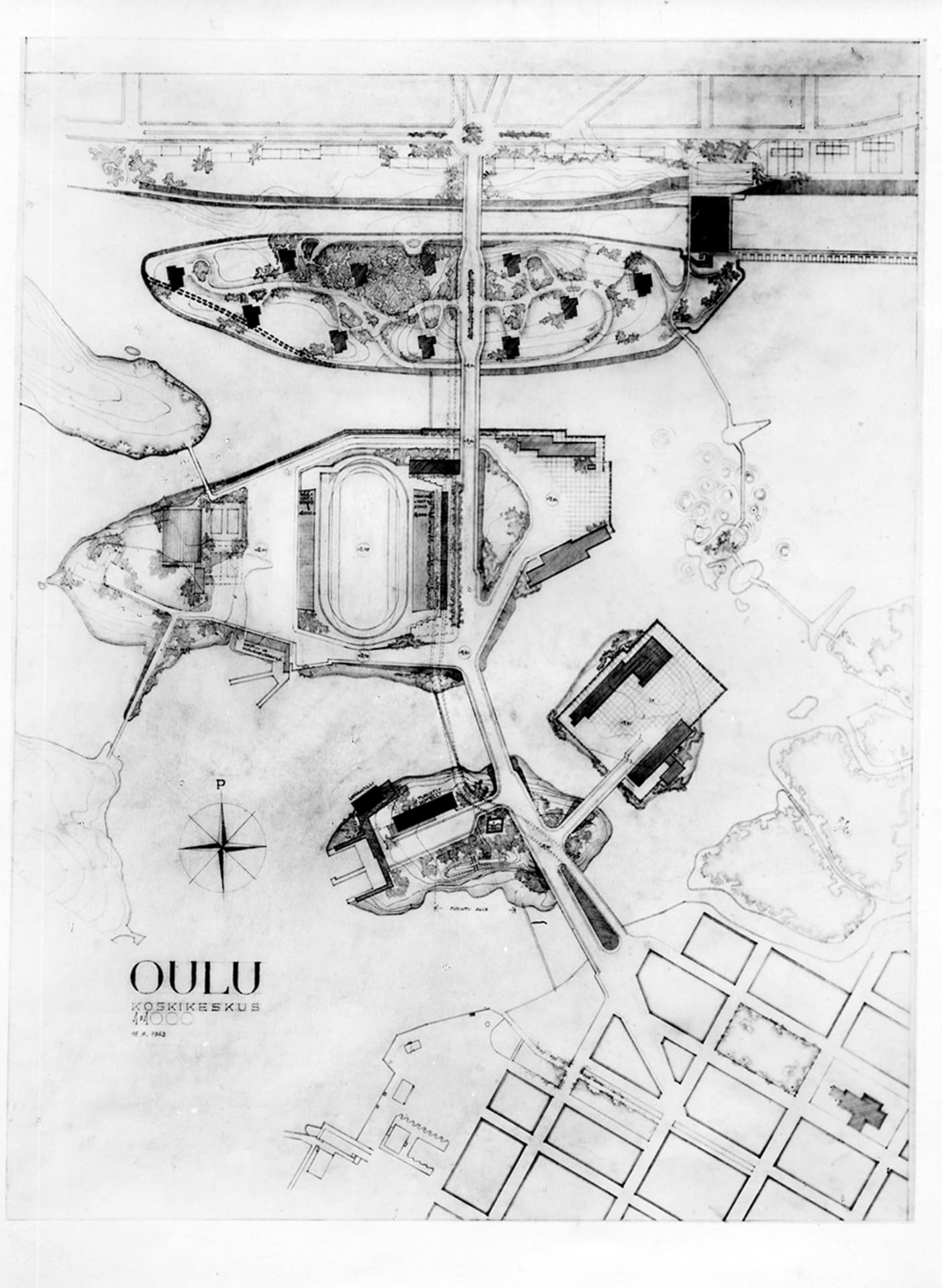
The construction site of the Merikoski hydroelectric plant turned Oulu’s rapids landscape into a stony wasteland in the 1940s. To improve the situation, an invited competition was held in 1942 for the site’s layout and the power station façades. Bertel Strömmer was commissioned to design the façades, while Alvar Aalto was tasked with the overall site arrangement.
Aalto’s proposal was visionary and extended far beyond the brief. He argued that the river delta should be considered as a holistic concept shaping the city’s future and identity. The controlled expansion of Oulu was now at stake, as the hydro plant would significantly influence urban growth and development.
Aalto highlighted the Oulujoki River with its islands and waterways as a rare urban feature that should be emphasised. The lost identity of the “rapids city” was to be replaced with high-quality design and execution.
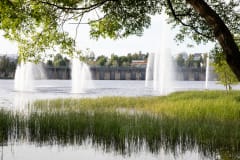
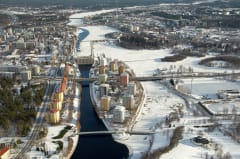
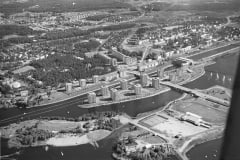
A civic centre placed on the islands, anchored by a bridge system, would unite the separate districts of central Oulu and Tuira. Thus, two neighbourhoods would merge into a Greater Oulu around Koskikeskus, framed by water surfaces. Fountains rising above the water recalled the former rapids, while park-like recreational areas contrasted with the modern traffic infrastructure of the bridges.
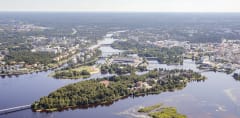
Today, Toivoniemi’s point-block towers, Raatti sports field and Kuusisaari park form the heart of the delta. The area is a popular venue for recreation and events, where parks, water surfaces and bridges create a unique landscape. Koskikeskus was Aalto’s first urban centre plan and remains a key part of Oulu’s identity. Its name derives from Aalto’s competition entry.
Add to favouritesShow all favourites